
SEND Training Won’t Fix Inclusion, Unless the System Changes
Katherine Gibson • 18 January 2026

Training matters but without systemic change, even the best SEND training will struggle to deliver real inclusion.

The government’s announcement of a £200 million SEND training programme for education staff is, without question, positive news. For many families, particularly those who have spent years fighting to be heard, this signals that their voices have finally cut through. A commitment to improving SEND support across nurseries, schools and colleges is welcome, and it deserves recognition.


What I See From Both Sides of the System

I say this as an ex secondary school teacher of 20 years, and now as Director of Crossroads Educational Consultants. My work today is with families who are often forced into home education because appropriate support simply isn’t available in school. Many of the children we support have SEND, and they are not unable to learn. They are learners who could thrive in mainstream education if the right support, time and flexibility were genuinely in place.


“Children with SEND are not unable to learn — they are learners who could thrive if the system allowed them to.”

Why Standardising SEND Training Matters

Standardising SEND training feels like the right move. For too long, the quality and depth of training has varied widely between settings, leaving staff with very different levels of confidence and understanding. Consistency matters, and done well, this could be a powerful lever for change.


The Reality Schools Are Working In

But training does not exist in a vacuum.

Schools are under immense pressure. Recruitment remains below target, retention is fragile, and workload continues to dominate conversations with teachers at every stage of their career. In this context, introducing new training expectations must be handled carefully. Without additional time, capacity and trust, even the most thoughtfully designed training risks becoming another demand placed on an already overstretched workforce.


When the System Undermines Inclusion

It’s also important to acknowledge that training has never been the only issue. Many teachers already know what inclusive practice looks like. The challenge lies in implementing it within a system that remains heavily exam-focused and outcomes-driven. When success is narrowly defined by results, schools are forced into difficult choices. Those pupils most likely to meet benchmarks are prioritised, while others, often pupils with SEND, receive less than they need, despite the best intentions of staff.

This is not a failure of understanding or commitment. It is a structural problem.


“This is not a failure of teachers — it is a failure of the system they are working in.”

What Teachers Actually Need to Make Inclusion Work

If we are serious about inclusion, teachers need more than training. They need smaller class sizes, reduced pressure around target grades, and psychologically safe environments where they can try new strategies without fear of repercussions. They need time and resources to reflect, adapt and embed inclusive practice properly.

Without these conditions, even high-quality training risks becoming symbolic rather than transformative.


Children at the Crossroads

At Crossroads, we work with children who sit at the crossroads of the system. Learners who have not failed education, but who have been failed by a system moving too fast to adapt. These are children who could succeed, if the environment allowed them to do so.


A Moment We Shouldn’t Waste

This SEND training programme is a step in the right direction. To truly deliver lasting change, it needs to sit alongside a broader shift in how success is defined and how schools are supported to meet diverse needs. Inclusion is not just about understanding, it’s about permission, prioritisation and pace.

Let’s use this moment not just to train differently, but to change the conditions that determine whether inclusion is even possible.


About the author

Kate Gibson is an ex secondary school science teacher with 20 years’ experience in education and is now Director of Crossroads Educational Consultants. She works with families whose children have SEND and who are often forced into home education due to a lack of appropriate school support. She is committed to ensuring home-educated children receive equitable access to education. 


Share

by Katherine Gibson 22 December 2025
Looking Back on a Year of Growth, Community, and New Beginnings in Home Education
A person holding a lens overlooking the horizon
by Kate Gibson 23 October 2025
When it comes to our children, few decisions feel as heavy as the one about whether to seek a diagnosis. As parents, we just want to do what’s best, to nurture, protect, and understand our child in every possible way. But when questions arise about learning, attention, behaviour, or emotional wellbeing, the path forward can suddenly feel uncertain. Recently, Gav and I found ourselves standing at this very crossroads with our own daughter. We began to notice differences, little things that didn’t quite fit the pattern of what we’d expected. Some days, we felt sure we were overthinking. Other days, we couldn’t shake the feeling that perhaps there was something more going on beneath the surface. That’s when we came across the phrase that has stayed with me ever since: “Not a label, but a lens.” Those five words changed how we viewed the entire conversation about testing, diagnosis, and support. The Case for Testing: Seeing Through a New Lens A diagnosis can offer clarity not as a verdict, but as understanding. It can shine light into areas that have long felt confusing or frustrating. It gives parents, teachers, and the child themselves a shared language to talk about what’s happening and how to help. For some families, a diagnosis opens doors to support that might otherwise be closed such aa access to resources, tailored strategies, and compassionate professionals who can make a real difference. For the child, it can be empowering. When a child understands why something feels difficult or why they think, learn, or respond differently it can ease shame and build self-awareness. Instead of asking, “What’s wrong with me?”, they can begin to ask, “What do I need?” That’s the beauty of the lens. It helps us see not just the challenges, but the strengths that come with difference. The Case for Waiting: The Power of Knowing the Child First But the other side of the conversation is just as important. A diagnosis can be helpful, yes, but it is not always necessary. Sometimes, in our urgency to find answers, we risk narrowing our view too soon. A label, if treated carelessly, can unintentionally define a child rather than describe them. It can shape expectations, both our own and others’, before we’ve truly taken the time to understand who that child is. Every child deserves to be seen and supported as an individual first. Testing should never replace connection, patience, and curiosity. In some cases, the best approach is to continue observing, adapting, and working collaboratively between parents, educators, and the child themselves without the pressure of a formal label. Standing at the Crossroads And so, that’s where we found ourselves somewhere in between. Wanting to know more, yet not wanting our daughter to be reduced to a word or category. In the end, what helped us most was reframing the question. Instead of asking, “Should we test or not?”, we asked, “What do we hope to understand?” When we began to see the process as a tool for insight, not an endpoint or a judgment, the decision became gentler. Whether we went ahead with testing or not, we knew our goal was the same: to work with our daughter, not on her. Not a Label, but a Lens Every child is unique. Some thrive when we have the language that a diagnosis provides; others simply need time, support, and empathy to grow in their own way. A label, in itself, changes nothing. What matters is how we use it, whether we choose to see it as a lens that helps us look more closely, understand more deeply, and respond more compassionately. So if you’re at that same crossroads, unsure whether to test or not, know that it’s okay to sit in the uncertainty for a while. The very act of asking the question means you’re already seeing your child clearly: as a whole, complex, wonderful person who deserves to be known, supported, and celebrated exactly as they are. Get in touch: info@crossroads.wales or Contact Us — Kate , Director, Crossroads
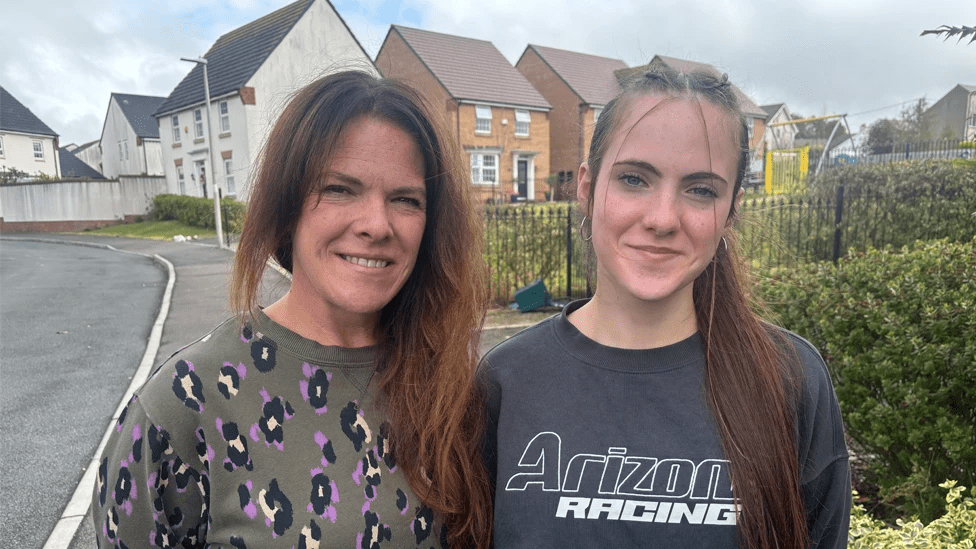
Meinir said her daughter Mali
by Kate Gibson 13 September 2025
Crossroads featured on BBC as home schooling in Wales triples. Supporting families with wellbeing, confidence, and trusted exam options.
More posts